

A few weeks ago, I decided to upgrade my Lexus EV with a feature found on the top model, door puddle lights that project the car’s logo when you exit the door. The light module contains a tiny LED projector that casts a crisp, illuminated Lexus logo onto the pavement. Yes, it’s nearly useless and gimmicky, not something I need, but why not, especially it being so inexpensive and simple to install. While Lexus dealers charge about $260 a pair for what looks the same and works identically. A search on Amazon
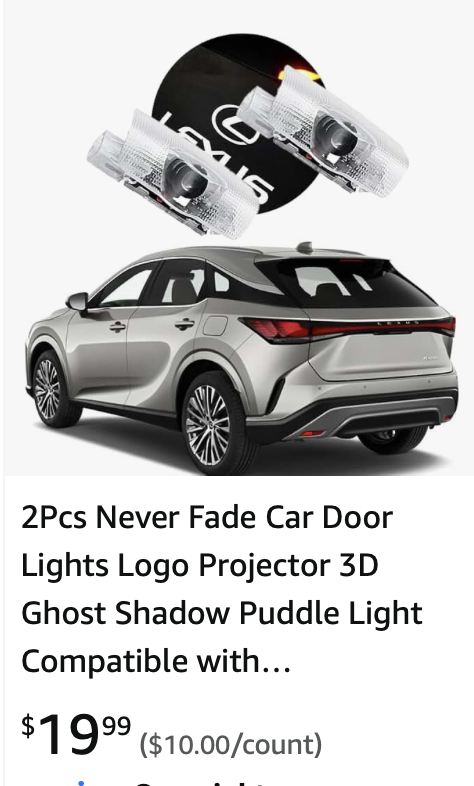
brought up dozens of the identical-looking products priced from $15 to $25 fa pair. Then I checked AliExpress, the retail arm of Alibaba.com. There, listed by a variety of sellers in China were the same products that were on Amazon ranging in price from $1 to $15 a pair. They offered these lights for an array of automotive brands, each one replacing the lamp module built into the door. (Installation takes about 3 minutes to snap out the original light, unplug the cable, plug it into the new module, and snap the it back into the door.) While the prices ranged widely, the items all looked very similar.
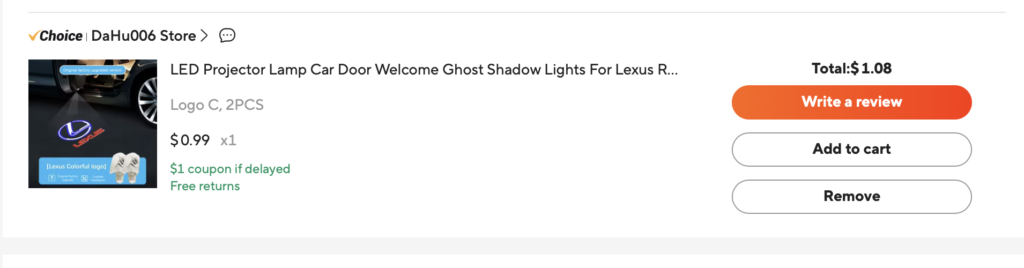
My purchase
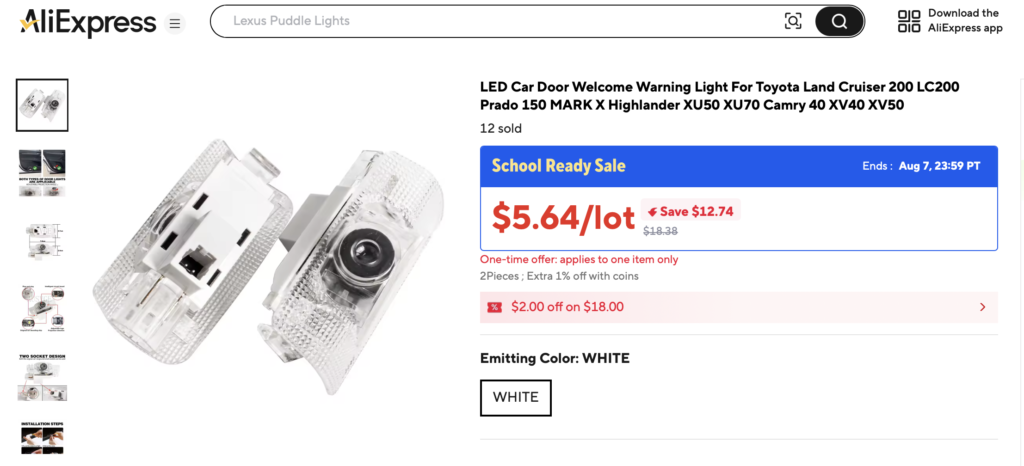
Similar to my purchase
And to top it off, shipping from China was free for my selection; most of the items are free or free with a minimum $10 purchase. Ten days later, a small envelope arrived in with the product.
How is something like this even possible? How can a factory in China manufacture an assemply consisting of a circuit board, plastic enclosure, a projection lens and LEDs and ship it to me for almost nothing?
AliExpress is the consumer marketplace owned by Alibaba, whose site has become a valuable entryway into finding Chinese manufacturers and products of all kinds. It’s hugely effective at connecting businesses in the U.S. with manufacturers in China, and a website I’ve used for many years along with a similar site, GlobalSources.com
While some compare AliExpress to Amazon, its underlying business model is fundamentally different. Unlike Amazon that buys inventory, brings the products to their warehouses, takes a margin and delivers the product, AliExpress acts as a connection agent. It doesn’t own the inventory. Instead, it connects consumers around the world with Chinese manufacturers. And unlike Amazon, they eliminate the middlemen, the Amazon margins, warehousing, and delivery costs. With AliExpress, the factory owner sells it directly to you for a modest profit and skips the retail chain entirely.
But what about the shipping costs? Neither the manufacture nor AliExpress ship their items one by one via standard air mail. Alibaba has their own logistics network, Cainiao, that consolodates shipping. Cainiao picks up the tens of thousands of packages from thousands of factories each day by truck and delivers them to a central hub and packs them tightly into air cargo planes. By shipping thousands of items in a single container, the cost to move my package across the ocean is a matter of cents. They then use the USPS to deliver the item to my mailbox, although a recent delivery was dropped off by an individual in his car. It’s been reported that they are working on a network of drivers to deliver the products, much like a DoorDash delivery service.
Most Chinese companies operate on very low profit margins, focusing on volume sales. Where an American retailer might look to make a 40%-80% profit, a factory seller on AliExpress is often content making 5%-10% percent—allowing them to sell thousands of units a month across a large number of global markets.
I should note that Ali-Express is not Temu, a scammy site that sells directly to consumers using the Amazon model. You still should take some care with Ali-Express. The reviews are often jumbled and duplicative, but when your total outlay is just a few dollars, what’s the risk? When you see such low prices compared to other sellers for the same or similar items, the difference is often the seller’s margin, how many hands it passes through, and how efficient their delivery system is. The product itself may be identical.
Here are a few more random examples of items from Ali-Express.
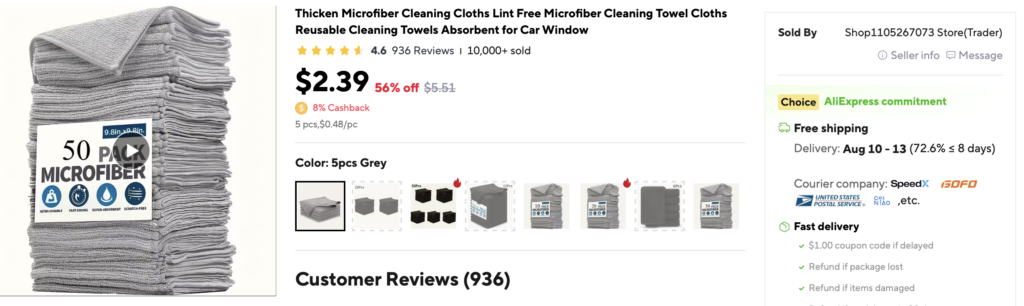
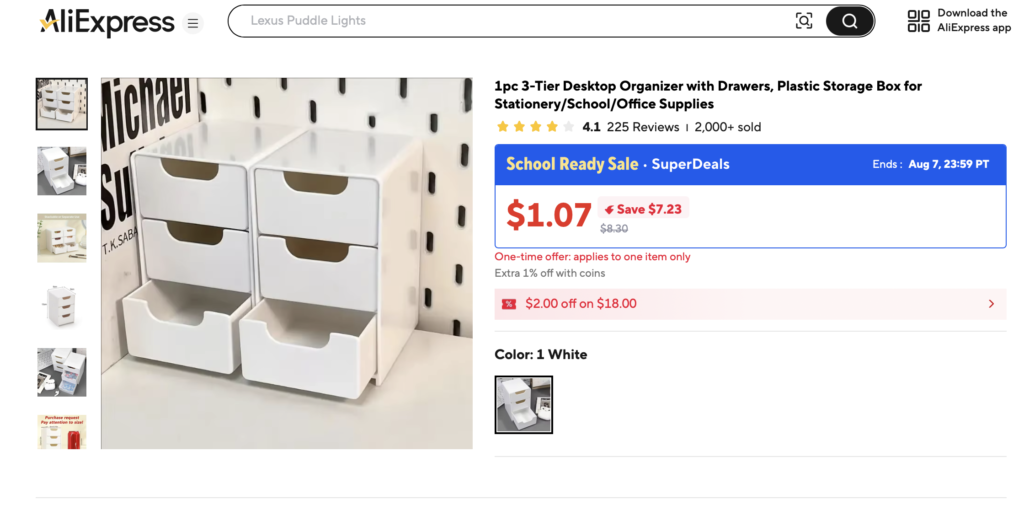
For the several orders I’ve made, delivery has been reliable and products have matched their descriptions. So, next time you shop on Amazon it’s worth checking Ali-Express. You may be getting the same product – just eliminating Amazon’s profit.

Normally I wouldn’t say anything about shopping for cheap Chinese junk, but come on, man, you should know better. It is false economy to buy that crap unless you just don’t care.
Many of the original parts sold by automotive companies are made in China. The point here is that low cost does not always equate with junk.
You appear to be caught up in wildly outdated thinking. “Cheap” and “Chinese” are still synonymous, but that’s intentional. “Junk” is more and more being replaced by design and innovation that are absent in Western markets; it is often the case now that the ONLY source for a product is China and the only question for you as a consumer is how much additional Western overhead (read: profit) you are willing to bear — especially as Western entities continue to strip any and all value from the premiums they continue to charge. China long ago lapped the West and continues to beat it mercilessly at its own game.
How, Phil, do you determine schlock from good on the site? I’ve allowed myself to be scammed-ish from social media ads that look legit. They are all things from China bc tho they all promise no hassle returns and exchanges, nope. They offer for you to keep what you got (it’s been shoes bc of.. it’s complicated) and pay another $10 for a new pair or just keep and get a refund. I’m wary. And about hacking. Thanks for great columns always and apologies for not saying so before.
That’s a good question. I think first you need to do a comparison of the product you are buying with other sites. In the case of the lamps, I spent time on the Amazon and Etsy sites and their reviews to understand the product. I compared the images and the products looked essentially the same. Now if the cost was $30 or more, I probably would be think twice about risking the money. But when something is $10 or so there really is no risk.
While I’ve not had to contest a purchase with this division of Alibaba, I have had amazingly good service buying through Alibaba. A few years ago I purchased a large stainless steel Argentinian Asado BBQ grill. I found the item on their site and contacted the manufacturer who confirmed they made the product for a U.S. company selling the product for $7000. I was satisfied with our multiple emails and ordered a nearly identical item for $800. Shipping was $600. ALibaba kept in touch with me (as did the manufacturer) to insure the transaction was going well.