
For decades, the consumer tech industry has operated under the rule that adding more features to a product makes it better. We see it in smartphones that ship with dozens of pre-installed apps you can’t delete, smart refrigerators and washers that require software updates to work, and televisions that spy on our viewing habits to serve us ads.
Somewhere along the way, tech companies stopped building basic products that worked like tools and started building ecosystems designed to lock us in. We are forced to pay for added complexity—sensors, subscriptions, connectivity, alerts, and features that we will likely never use.
The automotive industry has followed the same playbook for even longer. Screens have multiplied, software features have piled on, and paid subscriptions have been added for whatever the companies could get away with. And try ordering one feature and you’ll often have to take a much larger package of stuff you don’t want or upgrade to a higher level model.
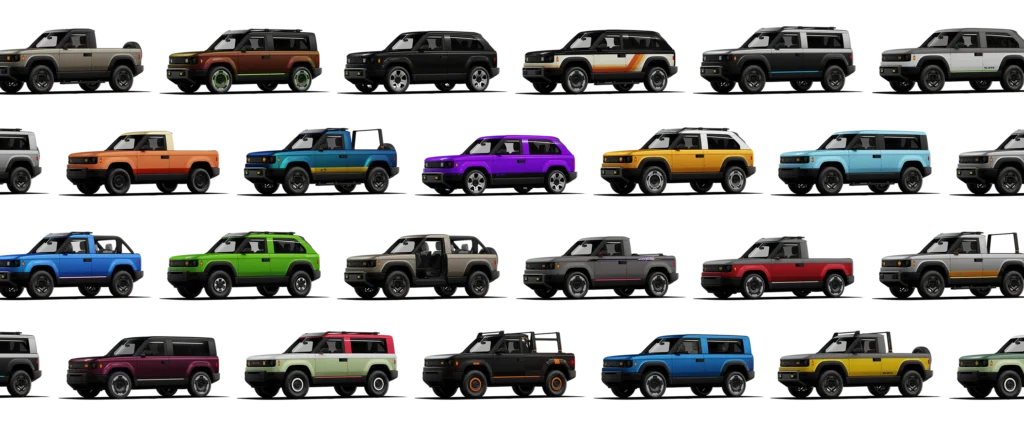
The Slate Auto truck was created by a Michigan-based startup founded in 2022 with the goal of stripping away the complexity and rising costs that have made new vehicles increasingly expensive, and is now offering their simple, affordable electric pickup as an antidote. It comes with minimal technology and a modular design that allows owners to customize or upgrade over time. It gets about 200 miles on a charge and cost about $25,000.
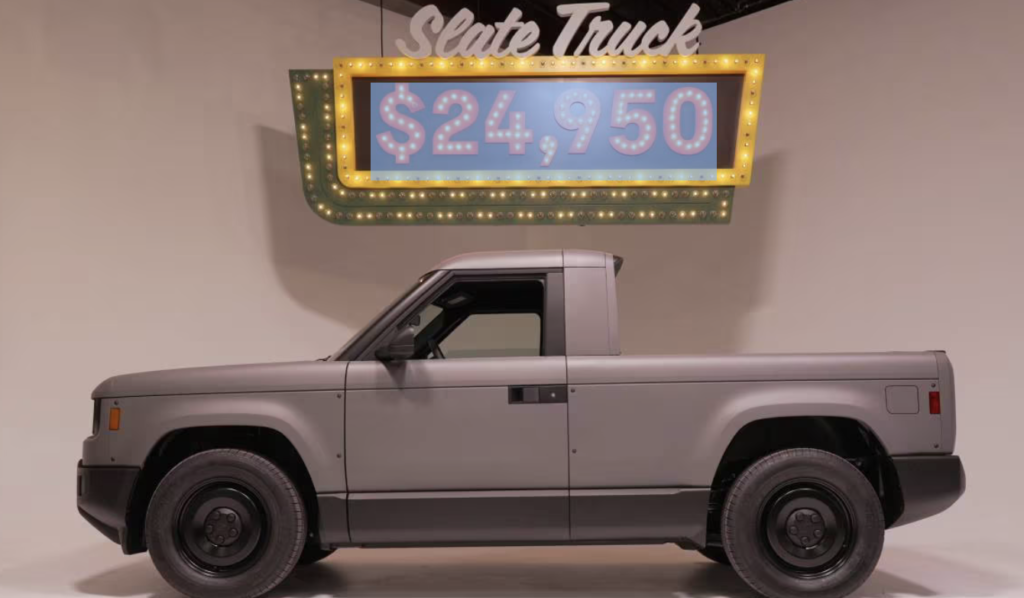
The Slate is the definition of minimalism- enough to get on the road and drive safely, but devoid of the extras. No radio, no digital menus, no heads-up display, and even no paint. It has basic hand-crank windows and physical knobs for other functions. Instead of forcing us to buy their package of accessories, Slate lets us choose only what we need now and add more things later.
The timing seems fortuitous. We’re seeing a pushback against feature bloat and excess. Many of us are simplifying our lives by deleting apps, limiting screen time, and canceling subscriptions. We’re are resisting the industry’s push to upgrade our devices yearly, and not contributing to the proliferation of electronic junk around the world and plastics infecting our seas.
How does the Slate work? Buyers can start with the basic two-seat pickup truck and change it when their life or budget demands it. In a way it echoes the early days of personal computing, when users opened the case to upgrade their own memory and sound cards.
In a world tired of artificial complexity, escalating costs, and consumer excesses, Slate is following a good product design truism: often the best product isn’t the one that does the most, but the one that does exactly what you need, does it simply—and leaves the rest out.
Here are some examples of how a buyer can customize the base vehicle using user-installable components to get the utility they actually require:
| Modular Upgrade Option | Core Functionality | Estimated Cost |
| SUV Conversion Kit (5-Seat) | Converts the utility truck bed into a fully enclosed 5-passenger cabin | ~$5,000 |
| Vinyl Color Wrap | Applies personal color/style to the bare factory body finish | $499 |
| Roof Rack System | Adds external overhead utility for outdoor gear or materials | Under $500 |
| Premium Seat Covers | Adds high-wear cabin protection for heavy utility or work use | Under $500 |
| Stereo/Audio Package | Bypasses the blank factory dash for basic independent sound | Under $500 |
| Phone Mounts & Interior Organizers | Utilizes your existing smartphone or tablet for cabin navigation | Under $250 |
Slate says it has about 180,000 advanced reservations, requiring about $100 down.

I wholeheartedly support the concept of Slate and will absolutely have them at the top of my list when I’m in the market for a new vehicle (and I’ve never owned a pickup truck in my life). Slate is what happens when car companies forget what makes a car a car. Mobile phone manufacturers would do well to take notice.