
There was a time when the under-seat bag barely mattered. It carried a book, a computer, a boarding pass, maybe a sandwich. The real action lived in the overhead bin. The focus of interest was the rollerboard bag category, with every luggage company creating a line of bags measuring precisely 21 x 9 x 15 inches. The gate agent could look at it and instantly recognize whether it was legal or not. If there was any question, they had a sizer to check it out.
Not anymore. In the last few years, airlines quietly changed the rules of flying. They shrunk seat pitch, tightened carry-on allowances, and began selling early boarding with more groups than anyone can keep track of. They made overhead space availability unpredictable unless you paid extra. Travelers got the message: the bag that matters most now is the one that you are guaranteed to take on board. The one that never gets gate-checked. The one that never leaves your side. The under-seat bag went from an afterthought to a major consideration.
You see it every time you board. People shove backpacks, duffels, totebags, and personal items into that small black void beneath the seat in front of them. Some are stuffed like a drawer. Others look like mini-suitcases designed by companies who have measured and reverse-engineered every airline’s published dimensions.
This shift isn’t by accident. It’s the result of three trends.
First, airlines turned overhead bin space into a form of revenue. Early boarding, priority lanes, bundled fares, and airline credit cards all promise carry-on certainty. That’s code for “pay us so your luggage doesn’t get taken away.” When something as basic as secure storage becomes a paid perk, travelers do what travelers always do: adapt.
Second, travel gear companies saw an opportunity. They recognized that if people were being squeezed into smaller and smaller defined spaces, they’d want an under the seat bag with maximum capacity. This sparked a wave of bags engineered with new materials, pliable but not flimsy, and plenty of pockets for whatever you stuff inside, and even big enough to carry a smaller bag inside. Because why just carry a briefcase when you can carry a larger bag with that briefcase tucked inside along with your other valuables.
Companies came out with a variety of solutions. Miniature rollerbags, large, open mouth totes, duffels, and backpacks. The problem is the under-seat space is unpredictable; it varies by airline, and even between a center seat and the aisle seat next to it. Companies like Quince, Bellroy, Briggs & Riley, and Away now treat the “personal item” as a category worth real research and real design dollars.
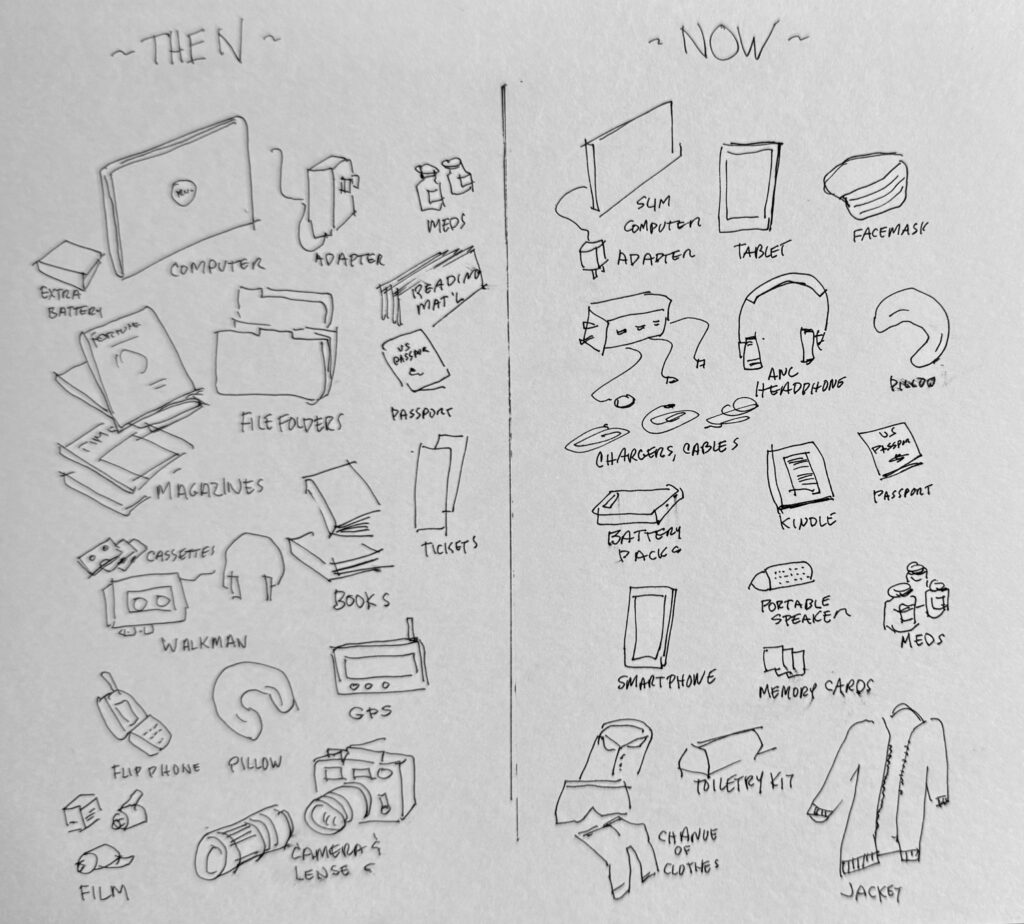
Third, travelers themselves changed. We carry more electronics, more batteries, more cables, and more must-not-lose items; even a change of clothes should our rollerbag be checked and lost. The under-seat zone has become the place for the essentials: laptops, passports, medication, chargers, noise-canceling headphones, tablets, Kindles, snacks, travel pillows, and the other gear that makes a long-haul flight tolerable. The overhead is now for clothes; the under-seat is our survival kit.
What makes this trend interesting is how quickly it has reshaped design. The best new under-seat bags share a few traits that didn’t matter ten years ago. They stay soft-sided and can shape-shift to fit under the seat. They open wide to give you instant access to the things you need mid-flight without forcing a full unpack or spilling its contents. They look small enough to get on board, but then can expand as you stuff your jacket and other items into it. And, of course, they must have a design that slips over the handle of your rollerbag, because they are now heavier with all the added contents.
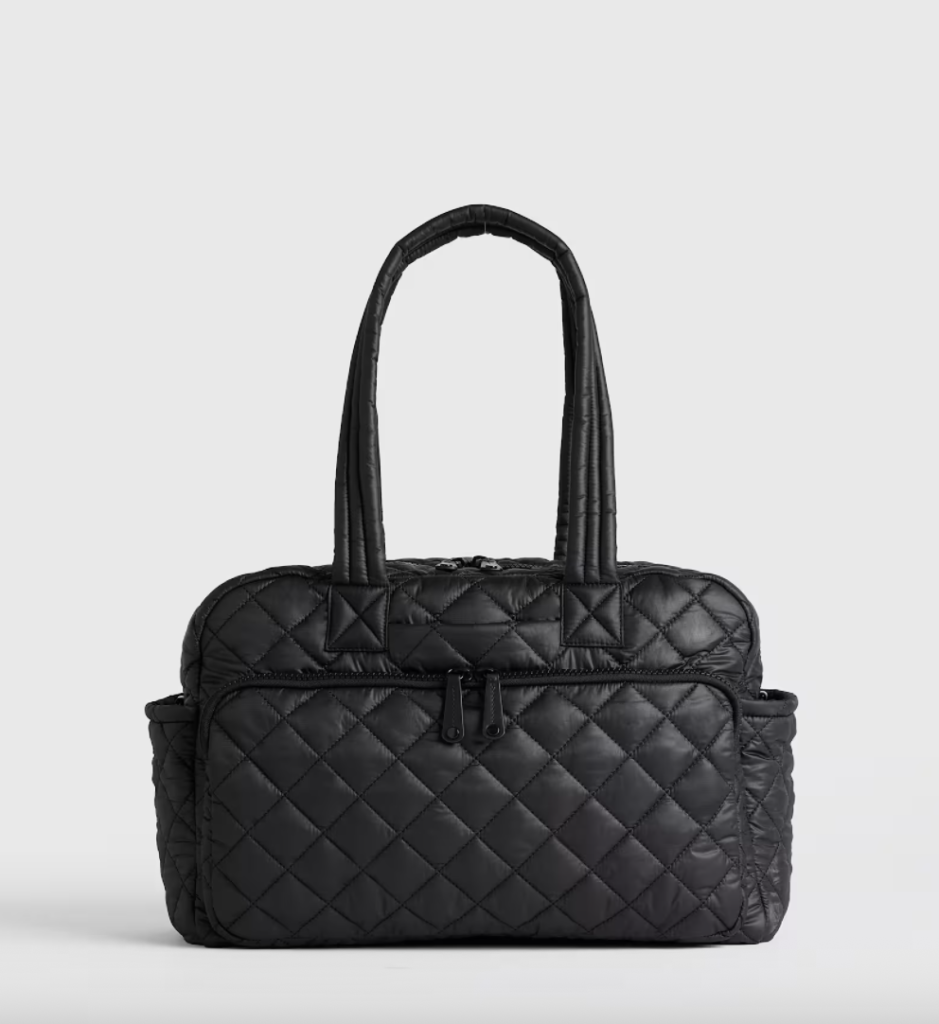
A perfect example is the Quince Transit Quilted Duffle Bag. It’s soft to protect your things inside, easily deformable, but the dimensions are deliberate. It fits under tight seats. It swallows a surprising amount of gear. It conforms around irregular obstructions under the seat. It has pockets exactly where you want them. And it weighs almost nothing. It represents the future of this entire category: simple, smart, optimized for frequent travelers.
This is the bag that I took on a recent trip to France. My daughter had raved about the bag, so I did a test. I compared the capacity of my Tumi backpack that I had been using for years with the Quince. It wasn’t even close. This bag swallowed up everything I could fit in the Tumi, plus about 20% more. And it’s a bargain at just $119.
The rise of the under-seat bag exposes a bigger truth about travel today. Airlines have reduced predictability. Gear companies stepped in to restore it. In the middle are travelers like us trying to outsmart an industry that increasingly throws us one challenge after another. Let’s hope they don’t look at our one carry-on article as the next source of revenue.

Keep track of what seat you’re choosing if you’re trying to maximize underseat storage. A 737 aisle seat spot is narrow, middle is wider (but depends on the electrical box the airline puts there), and then the window is in between size-wise. Airbus seats are more consistent. And some bulkhead seats have pass-throughs to the section in front, but others are a hard wall and then all your bags go overhead.