
If you travel often enough, you learn to lower your expectations.
Airlines shrink the seats and call it efficiency. They leave a few seats unshrunk and call it premium class. Hotels tack on resort fees for amenities that used to be included, even if they’re not used. Rental car companies charge surprise fees for cleaning or a minor scratch. A call to an airline requires navigating through a phone tree and often waiting thirty minutes. The entire modern travel experience feels engineered to test how much indignity we will tolerate and how many fees they can get from us.
And then there’s luggage.
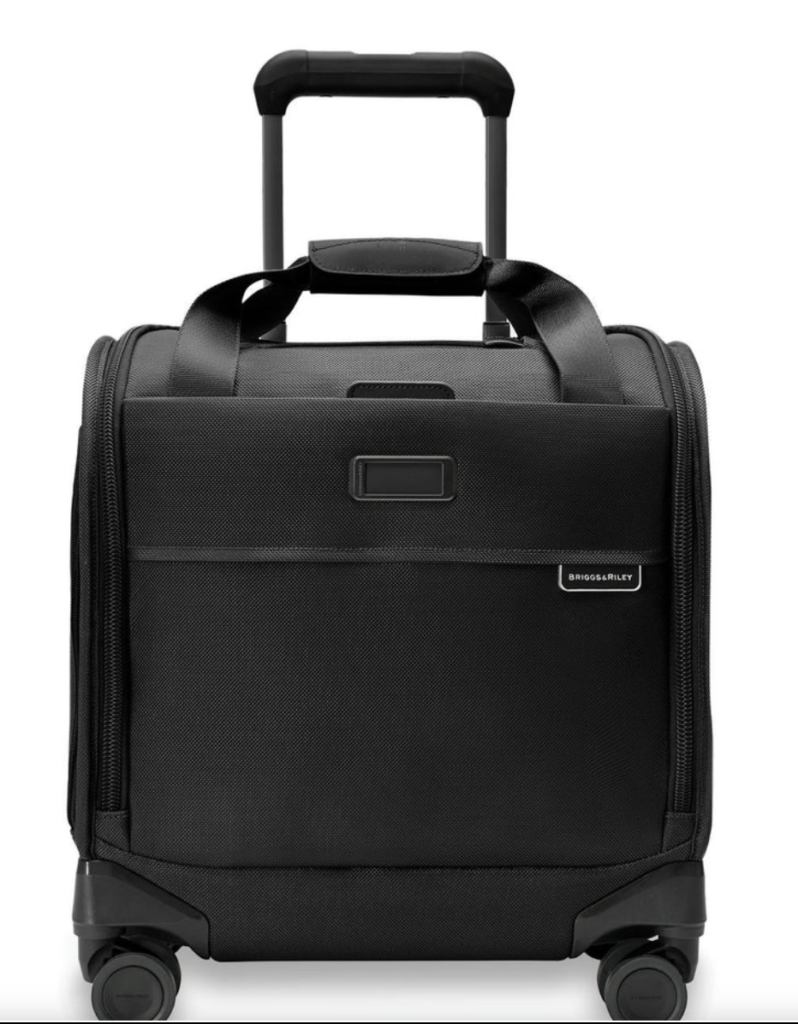
Recently, while walking from my arrival gate at San Diego International Airport to my car, my eleven-year-old Briggs & Riley rolling business case began to wobble. One of the rubber wheel treads was peeling off. After more than a decade of hard use, that seemed forgivable, even though the bag still looked almost new.
I called the company expecting a discussion about repair fees or proof of purchase. Instead, the representative cheerfully told me they’d ship me four new wheels for free. Not just the one bad wheel. Free, including postage. A few days later the parts arrived with clear instructions on how to replace the wheels. An hour later, the bag was as good as new. No argument. No hoops. No “extended warranty” upsell. Just a company standing behind its product.
Around the same time, a friend told me about his experience with Samsonite. The handle on his aging suitcase broke. He brought it to a local Samsonite store. They sent it back to the factory. Days later, a brand-new suitcase arrived at his home.
When was the last time an airline did something for you? When did a hotel proactively fix a problem without burying you in forms and excuses?
Somehow, the companies that profit from moving your bag treat you like a nuisance, while the companies that simply make the bag treat you like a long-term relationship.
Luggage makers live and die by reputation. A suitcase is a durable good; you buy and tend to buy more from a brand you have had good experience with. They can’t afford a disgruntled customer who tells ten friends—or ten thousand readers—not to buy their product. Most important, there’s plenty of competition.
Airlines and hotel chains, by contrast, operate in captive markets. Routes are limited. Loyalty programs try to lock you in. Consolidation of airlines and hotels have reduced competition. When customers have few alternatives, service becomes worse.
But there’s something else at work: philosophy.
A company like Briggs & Riley understands that the true value of a premium product isn’t just materials or design. It’s trust. When they replace a set of wheels on an eleven-year-old bag, they aren’t just fixing plastic and rubber. They’re reinforcing their brand and standing behind their lifetime warranty. They are encouraging me and others to speak out.
That’s the way many businesses used to operate, but so few do today.
It’s ironic that in today’s travel ecosystem, the only companies reliably treating travelers with dignity may be the ones who don’t operate planes or hotels or cars at all. The luggage makers are still providing accountability and standing behind their products.
Perhaps that’s because they remember something the rest of the industry seems to have forgotten. The relationship doesn’t end with the purchase, it continues for many years.

Hi Phil-
What about when your roll aboard falls over every time you walk away from it? Only hard shells stay upright and they have no outer pockets for my iPad. We use the best “personal item” bags that go over the handle which make the suitcases top heavy AND the top of the handle (of the hard shell) is formed in such a way that you need two hands to pry it over the squared edges.
We’re so frustrated. We just got back from a trip using wonderful Target hard shells, couldn’t get off the over the handle personal bag AND needed to “check” a TUB and 2 boxes because o bought so much the carry ons were only good in theory. I’d like your take on all of this.
That’s an issue I experienced as well. The front wheels on soft bags often collapse within the soft fromt corners. I now use a hard shell bag and put my computer and other stuff in the “Transit Quilted Duffle Bag” from Quince. It’s a bag my daughter and wife each have and love because it’s the maximum size that fits under the seat, is well padded, and easily slips over the handle of a rollerboard. Quince offers some first time discounts, so it should cost about $100.
Briggs & Riley really stands behind their products and their warranty. They have replaced wheels and handles for me on several bags at no charge.
I have had the same great experience with Briggs & Riley. Intelligent design, top-quality materials, and outstanding customer service. Simply the best.
I have been a fan of Briggs & Riley for almost 40 years, when I started traveling. All my bags from the beginning are still in use but last year, I decided to buy a new carry-on model “just because.” This bag was expensive, even on sale, but I was disappointed at the poor quality of the hardware, zipper pulls, etc. The structural materials were the same quality as the older versions, but on the 1st trip a zipper pull cracked in 2 pieces & I had to improvise to open & close my bag during the trip. That shouldn’t happen on a $500+ bag! I will always respect the company for maintaining the fabulous warranty and would’ve bought a couple of other pieces had the zipper hardware & the like remained as bulletproof as on earlier models. Sadly, I will now shop around before blindly ordering future B/R bags. The vintage models are still my favorites and look almost new!