
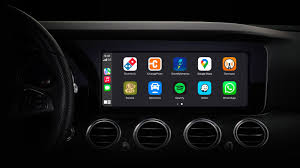
A friend just alerted me to a dealer selling the new Chevy Equinox, a $40K 300-mille range EV, for $25K, a huge discount off it’s list price. The car has generally received good reviews and seemed on the surface to be a terrific deal. However, doing a little digging, it does not have Apple Car Play or Android Auto, a deal-breaker for me and many others. But Chevy was warned.
(For those unfamiliar with the featue, Apple CarPlay – and Android Auto – mirrors your smartphone onto your car’s dashboard screen, giving you access to your phone’s apps, music, messages, and navigation through the car’s display and controls. Instead of learning a new interface, buying and signing in to new apps, and rebuilding playlists, you simply plug in your phone and instantly have access to everything you already use—your Apple Maps or Google Maps, your Spotify playlists, your podcast queue, your contacts, and your messages—all displayed safely on the car screen with voice control through Siri or Google Assistant.)
In October 2023, when GM CEO Mary Barra announced the company would phase out Apple CarPlay and Android Auto across its entire vehicle lineup, the automotive press, tech reviewers, and consumers erupted in opposition, saying it was a terrible idea that will cost sales. Now, as GM’s CarPlay-free vehicles reach customers, its exactly the disaster everyone predicted.
GM initially framed the decision around electric vehicles, claiming their new EV architecture required a different approach. But in October 2025, Barra announced CarPlay and Android Auto would be eliminated from all GM vehicles—gas, hybrid, and electric—by 2028.
The replacement is GM’s proprietary system based on Android Automotive (not Android Auto), branded as Ultifi, with built-in Google services. It means your phone apps can no longer work in your car. It was being done so that GM would have a new revenue stream, requiring its owners to pay a monthly fee for their versions of our current apps. GM also said it would allow them to better integrate other auto functions into a single system controlled by the company.
But it’s turning out to be a user-hostile mess. The customer response has been brutal. One Chevy Bolt EUV owner stated: “Love my car, but GM dropping CarPlay is a deal-breaker. No CarPlay = no future GM purchase from me. I will also never rent a car that doesn’t have CarPlay”.
Another owner who just purchased an $80,000 ZR2 truck said: “I would have not purchased this truck if it did not have car play or android auto capabilities”.
The anger from those who’ve actually used GM’s replacement system has also been scathing. One owner reported: “The google experience in my 2025 GMC 2500 AT4X is weak and laggy”. An Apple user noted, “I have spent decades building, transferring, curating my music playlists in the Apple ecosystem. You can’t take away CarPlay until you have a viable alternative.”
GM’s replacement system requires paid subscriptions for features that work free with CarPlay. One owner with 5 GM vehicles wrote: “I have no interest in paying monthly subscriptions for the 5 GM vehicles in my household when I already pay for 4 lines of unlimited cell phone coverage”. A Corvette Z06 owner who paid $185,000 discovered the factory navigation “only worked for 30 days” before requiring a subscription.
The user experience has also been called out. The Android-based system forces users to log in to each app individually, a process GM admits they’re “working to streamline”. Meanwhile, it makes it impossible for iPhone users to use native apps like Apple Maps, Messages, Phone, Podcasts, and Music.
Many of us go between our home and car while listening to a podcast or navigating to a destination from our calendar. We now have a seamless connection. So much of what we do is on our phone and we just want to have it accessible in our car. It’s even more important when we step into a rental car and magically have the same interface we have on our car at home.
Barra’s justification for eliminating CarPlay and Android Auto was that customers complained it was “very clunky” moving between those and the car’s native interface and that it “could be distracting”.
Cars.com editors stated: “It seems premature to make plans to remove features like Apple CarPlay and Android Auto that are still highly valued by many shoppers. It’s not hard to see a scenario where a shopper weighing two similar vehicles—one with CarPlay and a GM one without—chooses the non-GM vehicle based on this feature alone”.
Mary Barra gambled that GM’s brand loyalty would overcome customer preferences. Early returns suggest she badly miscalculated. In a market where a single feature can swing purchase decisions, GM just made every competing vehicle more attractive. Now they’re learning the hard way: when you ignore your customers, they ignore you back.

This decision alone should have GM seeking a new CEO. People are already sick to death of subscriptions and taking away functionality as well is beyond stupid. GM is on my blacklist because of this. Barra should have known better considering the reaction when a certain German automaker tried charging an annual fee for Apple CarPlay (Since dropped)
Reading this after just having read and commented on your previous piece about automotive surveillance tech. Seems like I could just cut-and-paste that comment here as well…almost.
Out of roughly a couple dozen cars in my driving life of 50 years (and counting) only two have been GM products, most recently a 1999 Olds Aurora whose engine seals gave out, so I’ve never been predisposed to GM in the first place. Nor am I religious about CarPlay or Android Auto (I’m an outlier in many other ways too). But this move seems suicidal, hard stop. I track car news less now than I used to so I’d heard rumors about this but did not know GM actually followed through and jumped off this metaphorical cliff. To think they were bailed out in 2009 by the US Government for THIS.