
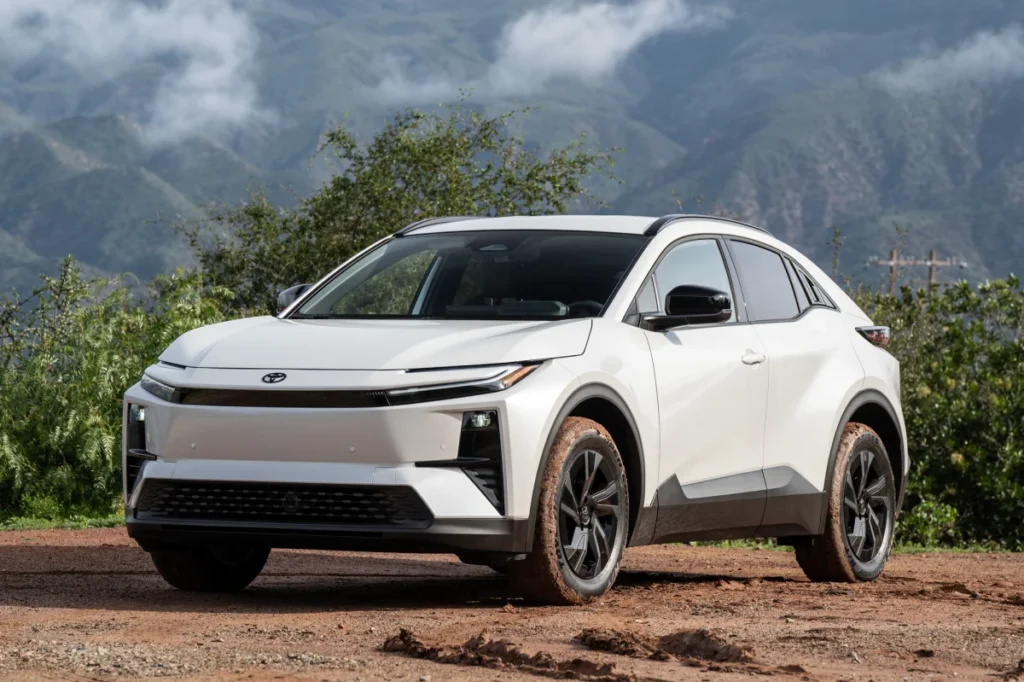
There is a question that skeptics of electric vehicles love to raise every time I write a positive column about EVs. It sounds reasonable when you hear it: “Sure, your EV uses no gas — but what about the oil used to create the energy to charge it? How is that any better?” It’s a fair question. It just happens to have a very clear answer, and the answer still favors EVs.
The reason EVs win regardless of the energy source, comes down to a fundamental law of physics: electric motors are much more efficient than internal combustion engines. According to real-world data collected by the U.S. Department of Energy, EVs are 2.6 to 4.8 times more efficient compared to a gasoline internal combustion engine. EVs convert over 77% of the electrical energy from the grid to power at the wheels. Conventional gasoline vehicles only convert about 12–30% of the energy stored in gasoline to power at the wheels.
A gasoline engine is essentially a very expensive, very heavy machine for converting most of the energy in your fuel into heat and noise, with a fraction left over to actually move the car. An electric motor flips that equation. It converts electrical energy directly into motion through electromagnetic force, with almost none wasted.
EVs need 31% less energy than gas cars, even when charged entirely by coal plants. That’s the minimum of the EV’s advantage — with renewable power it’s much higher.
A study by the International Council on Clean Transportation found that battery electric vehicles have by far the lowest lifecycle greenhouse gas emissions. Emissions over the lifetime of average medium-size EVs registered today are already lower than comparable gasoline cars by 66–69% in Europe, 60–68% in the United States, and 37–45% in China. Even in China — where the grid is among the most coal-dependent in the world — the EV still wins by nearly 40%.
And there’s one more factor that never gets mentioned in these debates: the hidden energy cost of gasoline itself. Before a drop of gas reaches your tank, it has to be discovered, extracted, transported, refined, and trucked to your gas station. Significantly more energy is required for oil and gasoline transport from wells to the end user than for fuel transport from wells to electrical generating plants and electricity transmission to the charging station.
The efficiency advantage translates directly into your wallet. For a typical U.S. driver charging at home, an EV costs around $0.04–$0.06 per mile, while a gasoline car is closer to $0.10–$0.13 per mile.
One study found it costs an average of $12.86 to fully charge an EV at home, compared to $43.00 to fill a standard 14-gallon gas tank — working out to roughly 5 cents per mile for an EV versus 12 cents per mile for a gasoline vehicle. And that study was in 2025 when gasoline was much cheaper than it is today.
On a per-mile basis, EV maintenance and repair costs run about 40% lower than comparable gas vehicles. There is no engine oil to change, no transmission fluid, no spark plugs, no timing belt, no exhaust system. In nearly three years of driving my Lexus EV, I’ve spent virtually nothing for maintenance. Consumer Reports estimates that lifetime scheduled maintenance and repair costs for a battery EV average $4,600 — roughly $0.031 per mile — while the equivalent ICE vehicle demands $9,200 in lifetime maintenance.
China is somewhat unique. It has become the fastest-growing EV market on earth — and also one of the most coal-dependent nations on earth. As of the end of last year, 2025, China’s electricity generation relies on coal for nearly 55% of its needs, with hydropower at 14%, solar contributing 11%, and wind accounting for slightly above 10%.
And yet, simultaneously, China is also the world’s dominant force in renewable energy. China’s wind and solar generation capacity more than doubled in the three years between 2021 to 2024, from 635 GW to 1,408 GW. In early 2025, the capacity of wind and solar combined overtook that of coal. China is the world’s largest investor in renewable energy. In 2024, more wind turbines and solar panels were installed in China than in the rest of the world combined.
China is, in other words, moving in two directions at once: aggressively building renewable sources of energy while also aggressively building coal, because its economy’s electricity demand is growing faster than any single energy source can satisfy.
What does this mean for Chinese EVs? They are still significantly cleaner than Chinese gasoline cars — but less dramatically so than EVs in Europe, the U.S., or places that use a lower percentage of coal for their energy. What all this means is EV cars are better regardless of the source of its energy.
EVs are China’s way of decoupling its transportation sector from the needs for oil.
Now consider what happens with EVs over time. A gasoline car’s carbon footprint is locked in at the factory — it will always burn fossil fuel, at the same efficiency, for its entire life. An EV, by contrast, gets cleaner every year as the grid that charges it shifts toward renewables.
Over time the EV you buy today will be progressively less dependent on any fossil fuel over time as we become less dependent on oil. The internal combustion engine is what it is, for as long as it runs.
In summary EVs are more efficient machines powered by an energy source that is getting cleaner over time and its maintainance is less expensive. The source of the electricity matters — but less than their critics claim, and less every year that passes.
