
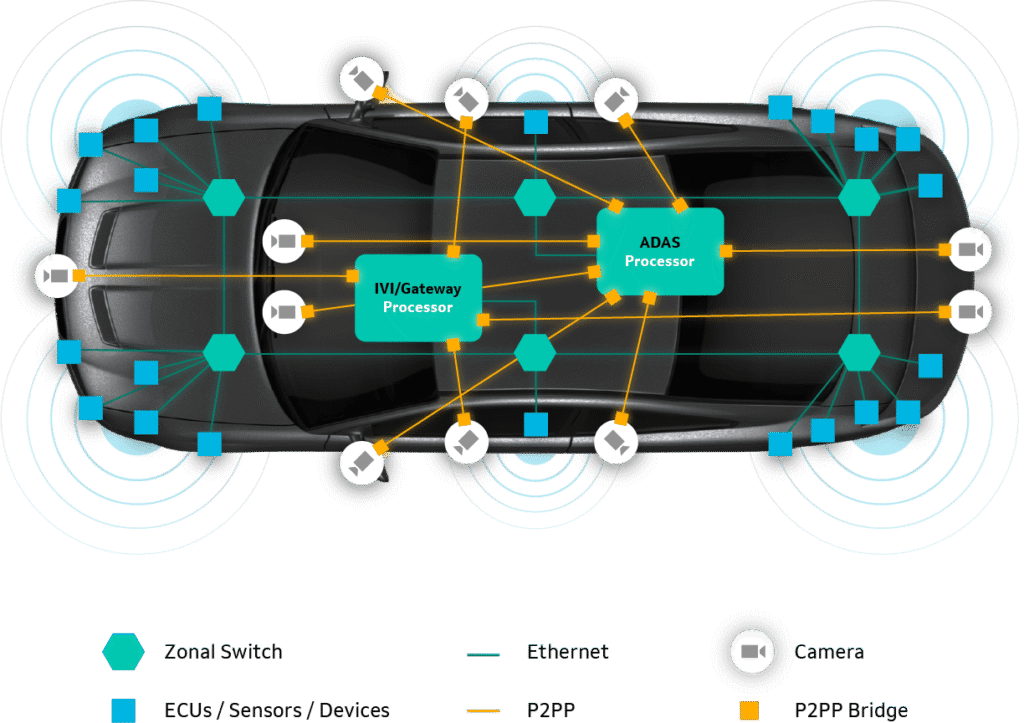
This week I received a survey from Lexus asking about a new feature they’re considering. The questionnaire began by asking how often I park my car on the street, in my driveway, and in a parking lot. It went on to ask how worried was I about car theft, a car break-in, or someone hitting my parked car, and what preventive actions I was taking.
It then showed me a three-minute video describing a concept that would create a wireless network between a multitude of nearby automobiles to address this problem. It explained how it would use the video cameras in each car to provide wide area video surveillence of a large parking lot or another area of a city to detect when a thief was lurking in the area, ostensibly to steal a car or break into it. It even showed a would-be car thief stooping down between parked cars, trying to find an unlocked door. The video portrayed the idea as an exciting new concept to supplement the car alarm and keep us and our cars safe from theft and damage.
The questionairre then went on to ask a series of questions about how interested I would be in this feature. For a brief moment it sounded interesting if connected vehicles could spot suspicious activity and alert owners and law enforcement in real time. It might even deter criminals.
But an instant later, I thought of the RIng camera and the contraversy it has created with its Super Bowl ad, showing how its doorbell cameras are now being networked together and used to find lost dogs. People rebelled at the ad, realizing how easily the cameras could be turned on any of them for surveillence. The company’s CEO had to apologize, yet this is nothing new for Ring (owned by Amazon). It has a history of entering into arrangements with law enforcement agencies and private companies to monitor neighborhoods and provide surveillance videos.
Now imagine replacing fixed doorbells with wide-angle outward-facing cameras on wheels, pointing in all directions. Today’s vehicles contain anywhere from a few to a dozen wide-angle cameras, as well as cellular connectivity, GPS tagging, and over-the-air update capabilities, all connected to the cloud. That hardware plus new software with some AI mixed in has the makings of a massive surveillance system.
Also, cars don’t just monitor a front porch. They move through residential streets, commercial districts, past medical offices, political gatherings, churches and mosques. They park outside homes. They idle next to pedestrians. They capture license plates and faces at close range. And increasingly, they are capable of transmitting that data back to the manufacturer. In fact, GM was sued and paid a fine for transmitting its car owners’ driving habits to insurance companies, who then raised the rates of some of the owners.
In a world where vehicles collectively form a moving camera grid and AI makes sorting through huge amounts of data much easier, our anonymity in public spaces could disappear withour proper safeguards and legislation. We love having cameras in our car to help us back up, park and detect cars in our blind spots, but that same technology can be turned around to spy on us.
To be clear, I’ve read nothing yet about such a system actually being developed, but it certainly seems feasible and relatively easy to do. And based on Big Tech’s lack of support for democratic values, there’s little holding them back.
Compared to the existing Ring cameras, traffic light cameras, and cameras on street poles, a system based on our cars’ cameras would provide a massive increase in the the government’s and corporations’ ability to monitor our every move.
The Lexus survey didn’t ask whether I want to live in a surveillance state, but its proposal sure looks like a big step in that direction.

I was fixated on the functional network diagram at the top of your column well before I got to the words (which were, unsurprisingly, as expected). Won’t that be a fun restoration project in thirty or forty years? As if it will be possible to source replacement electronics then — presuming *anyone* will be motivated to try.
Saw something recently that postulated modern car companies have forgotten what cars are for. Fair enough. But what does it mean to be a customer in the modern “subscription economy?” Nobody wants to sell goods anymore if they can figure out a way to sell services instead — and car companies are no exception. These are definitely trying times to be a “car guy” (whatever that may mean now).
To your thesis, it’s hard not to feel like the little Dutch boy with his finger in the dike; what can one person do to stop this onslaught? Not participating is the obvious answer, but how hard are most people willing to work just to be able to move around? I haven’t bought a new car since 2007 (and even that otherwise fine automobile was marred by flaky electronics that stole much of the joy) and currently struggle to keep our 2011 model (purchased used) on the road, largely to avoid the current marketplace.